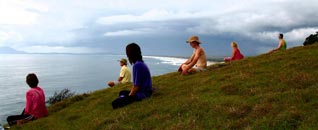
The schedule and what happens
in retreats in our network varies, depending on the teacher.
What is common is that there are periods for sitting meditation
(usually between 30 and 45 minutes), an instruction period (usually
one or two per day, sometimes in the form of a guided meditation),
a dharma talk and meetings in a small group or privately with
a (or the) teacher(s). These meetings often happen in walking
periods or breaks.
There is also an optional yoga
or exercise period in the morning, sometimes another later in
the day, walking meditation periods and free time. And there
is a work period: usually 45 minutes to help with food preparation,
meal clean-up or generally keeping the place clean. Having a
work period helps keep the cost of the retreat down.
It's not necessary to go to
everything on the schedule. Sometimes people sleep in and don't
go to the early morning yoga. Or they might get up early but
go for a walk. Sometimes in the first few days of a retreat people
get tired and they might go to bed early or nap sometime in the
afternoon. It's also not necessary to be able to sit for long
periods on a meditation cushion on the floor. Sitting on a chair
is fine. Upright chairs are recommended.
For the functioning of the
retreat people need to turn up to the work period or do their
job if it's outside a work period (eg wash-up after dinner).
In general people are encouraged to do as much of the program
as they can.
The following is an example
of one retreat schedule we use:
5:45 Wake Up
6:00 Yoga or Exercise
6:45 Sit (ie Meditation)
7:30 Breakfast
8:15 – 9:15 Work Period
9:30 Meditation Instructions & Sit
10:30 Walk
11:15 Sit
12:00 Walk
12:30 Lunch – Rest
2:00 Inquiry or Guided Meditation
3:00 Yoga
4:00 Sit
4:45 Walk & Stand
5:00 Light Meal
6:30 – 7:00 Sit, followed by 10 min break
7:10 Dharma Talk
8:00 Standing Meditation
8:30 Evening Poetry / Sit
9:15 Rest
Some retreats have breaks rather
than walking meditation. Some don't have scheduled sitting periods.
Insight Dialogue retreats are different again but still have
some features of the schedule here.
Retreats are conducted in silence, meaning that apart from talking
to the manager and the teacher(s) there is no talking apart from
necessary communication. While this can be strange for new people
in the beginning, it doesn't take long to become accustomed to
it (even like it) and it tends to help quieten the mind.
The retreats in our network
are quite different from the ten day Vipassana retreats run under
the tradition of S.N. Goenka. (eg at Blackheath in NSW or at
Pomona in Queensland). They differ in the schedule, the mix of
activities, the atmosphere and the type of meditation (even though
they are both called "Vipassana").
Retreats are opportunities
to settle and allow a calmness and focus to develop in a supportive
environment. Some people have their own issues they wish to work
through and find the quiet space useful for that. Other people
are more intent on getting to know what Insight Meditation is
about, or they know what it is about and see the retreat as an
opportunity to practice.
The food on our retreats is
vegetarian and usually special dietary needs can be catered for.
While the cost of the retreat
includes food and accommodation, it does not include any payment
to the teacher. The teachings are offered with a spirit of generosity
and there is the opportunity to respond with generosity by giving
support to the teacher and the teachings. A box is put out for
this (called "dana") towards the end of each retreat.
Buddhist teachings and practices were passed on for centuries
by monks and nuns who were supported just by the generosity of
others and we keep to that spirit by not putting a price on the
teachings themselves. Some teachers depend completely on dana
for their income, others take time off work to lead retreats.
Usually the silence is lifted
before the end of the retreat and participants have an opportunity
to get to know each other. Retreats often end with a closing
circle where anyone who is inclined can talk briefly about their
experience.
Each retreat has a contact person and you can find out from them
before a retreat about what is proposed for a that particular
retreat.